1
/
of
2
We Are Busy Bodies
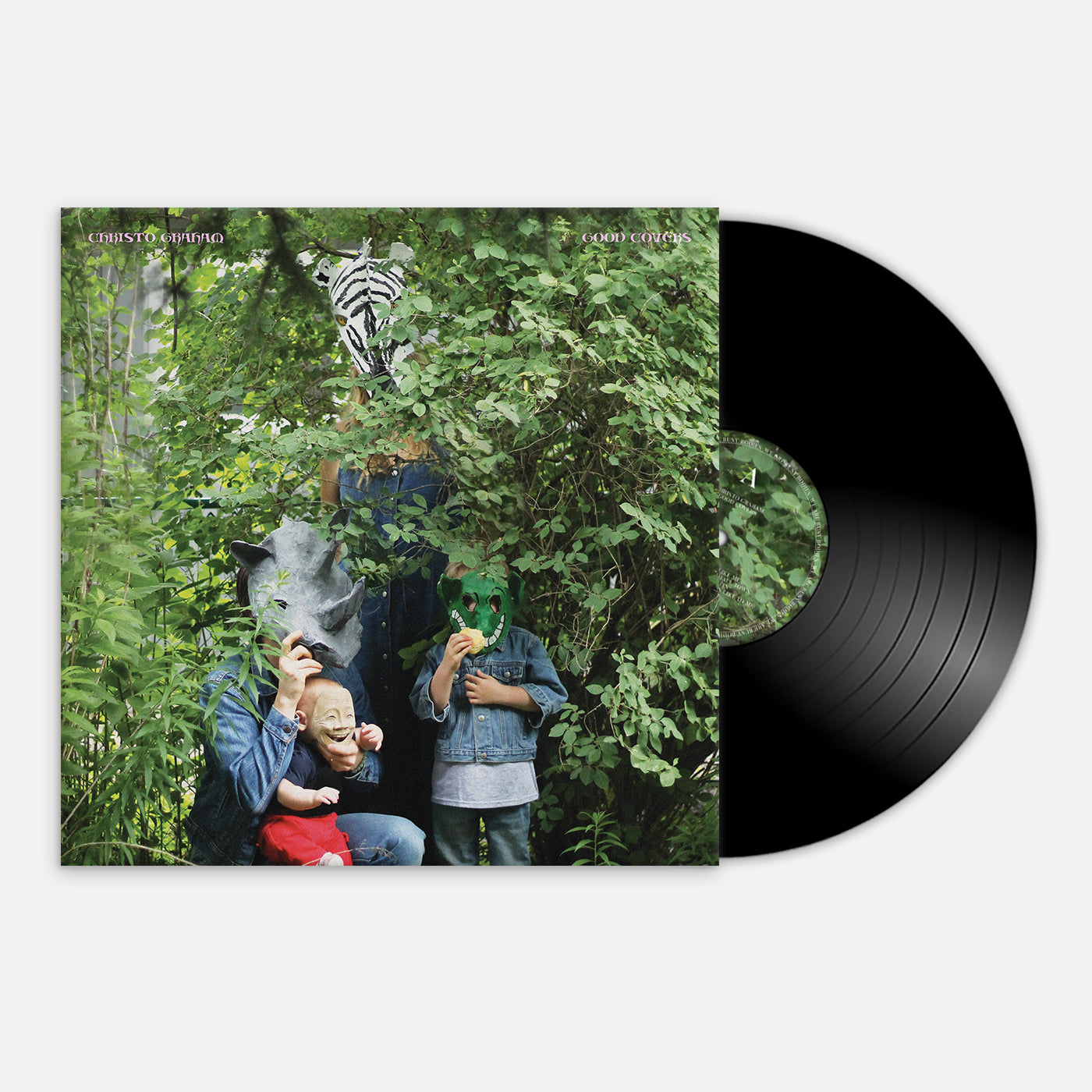
Christo Graham - Good Covers
Christo Graham - Good Covers
Regular price
$25.00 CAD
Regular price
Sale price
$25.00 CAD
Taxes included.
Quantity
Couldn't load pickup availability
Out January 30, 2026
Stratford, Ontario-based songwriter Christo Graham returns with Good Covers, a stunning slice of self-described “British Invasion Americana” boasting a varied tracklist that combines pastoral banjo fingerpickers, McCartneyesque piano balladry, and languid acoustic psychedelia into a remarkably cohesive package. His fifth release for Toronto’s We Are Busy Bodies, the album takes an understated and homespun approach, the directness of the recordings reflected in the immediacy of the resulting tunes. It arrives in record stores on January 30th, 2026.
Good Covers is Graham’s eleventh album overall; he has been releasing work through We Are Busy Bodies since 2020’s Turnin', and his earliest records date back to early high school. By his own admission, his discography has run the stylistic gamut, veering into genres as disparate from his current work as slick 80s pop (2016’s November Baby) and bombastic rock opera (2025’s Clown Riot). Lately though, his guiding light appears to be rustic folk and country songwriting filtered through the lens of kaleidoscopic 60s pop. On Good Covers, sparse instrumentation disguises sneakily ornamental and lush arrangements, with expertly deployed organ drones and twinkling Cameo piano augmenting the standard guitar, bass, and drum layers. It’s an exercise in making full use of a simple toolbox; everything was tracked with one Shure 545S, all guitars were run clean through a small Silvertone bass amp, and the vocals sit unadorned above the mix. This no-frills aesthetic is the record’s greatest strength, allowing Graham's deft words and sticky melodies to take the listener’s primary focus.
The album was recorded over about three weeks of winter 2025 at Graham’s then-home in Lansdowne, Ontario. Eschewing the analog recording of two recent efforts, he opted to preserve a “tape mentality” of simple and efficient recording while tracking this outing digitally. The album was engineered and mixed by Graham himself in a time of transition; he had just welcomed a newborn and was preparing to imminently move house. Due to this, the album is a family affair — Graham completed bass and acoustic takes with a one-week old strapped to his chest, while his four-year old engineered the drum recordings and his wife Kelly lent harmonies to a few tracks. The only other guest on Good Covers is Brian D’Arcy James, who appears on the duet “Hidin’ Your Hurtin’.”
It’s this song that inspires the wordplay in the album’s title, with Good Covers, which according to Graham “could be about what we present versus what we hide; how we protect ourselves with things we say and don’t say; how the poker face or mask has changed in the age of big technology.” Beyond this, he is reluctant to influence listeners’ lyrical interpretations, but offers that the songs are often borne from personal rumination (album opener “Tell Me If You Like Me”), observational sketching (lead single "That's Not What It Looks Like to Me”), or stories imparted by others (the character study “You Are Your Own Small Town”). Other standouts include the stark “I Changed My Mind” and the one-two punch of rollicking minor-key number "Invisible Dice” and its nearly slowcore follow-up, ”Invisible Dice Roll Again,” two tracks inspired by a mythical anecdote of Townes Van Zandt’s last show in Toronto. Second single “Heather” is a clear highlight, a relentlessly catchy number that recalls the baroque piano-pop of Harry Nilsson or Van Dyke Parks. It’s on meditative closer “Time Can Only Tell,” though, where Graham brings Good Covers’ stylistic throughlines to their logical end – a pared-back and affecting conclusion to the prolific songwriter’s most accomplished album yet.
Graham recently completed a residency at Toronto’s Cameron House, performing once each week for the month of October alongside friends and collaborators. To support Good Covers, he’ll embark on a tour supporting Welsh guitar primitivist Gwenifer Raymond in North America this December.
- Jack MacKenzie
Good Covers is Graham’s eleventh album overall; he has been releasing work through We Are Busy Bodies since 2020’s Turnin', and his earliest records date back to early high school. By his own admission, his discography has run the stylistic gamut, veering into genres as disparate from his current work as slick 80s pop (2016’s November Baby) and bombastic rock opera (2025’s Clown Riot). Lately though, his guiding light appears to be rustic folk and country songwriting filtered through the lens of kaleidoscopic 60s pop. On Good Covers, sparse instrumentation disguises sneakily ornamental and lush arrangements, with expertly deployed organ drones and twinkling Cameo piano augmenting the standard guitar, bass, and drum layers. It’s an exercise in making full use of a simple toolbox; everything was tracked with one Shure 545S, all guitars were run clean through a small Silvertone bass amp, and the vocals sit unadorned above the mix. This no-frills aesthetic is the record’s greatest strength, allowing Graham's deft words and sticky melodies to take the listener’s primary focus.
The album was recorded over about three weeks of winter 2025 at Graham’s then-home in Lansdowne, Ontario. Eschewing the analog recording of two recent efforts, he opted to preserve a “tape mentality” of simple and efficient recording while tracking this outing digitally. The album was engineered and mixed by Graham himself in a time of transition; he had just welcomed a newborn and was preparing to imminently move house. Due to this, the album is a family affair — Graham completed bass and acoustic takes with a one-week old strapped to his chest, while his four-year old engineered the drum recordings and his wife Kelly lent harmonies to a few tracks. The only other guest on Good Covers is Brian D’Arcy James, who appears on the duet “Hidin’ Your Hurtin’.”
It’s this song that inspires the wordplay in the album’s title, with Good Covers, which according to Graham “could be about what we present versus what we hide; how we protect ourselves with things we say and don’t say; how the poker face or mask has changed in the age of big technology.” Beyond this, he is reluctant to influence listeners’ lyrical interpretations, but offers that the songs are often borne from personal rumination (album opener “Tell Me If You Like Me”), observational sketching (lead single "That's Not What It Looks Like to Me”), or stories imparted by others (the character study “You Are Your Own Small Town”). Other standouts include the stark “I Changed My Mind” and the one-two punch of rollicking minor-key number "Invisible Dice” and its nearly slowcore follow-up, ”Invisible Dice Roll Again,” two tracks inspired by a mythical anecdote of Townes Van Zandt’s last show in Toronto. Second single “Heather” is a clear highlight, a relentlessly catchy number that recalls the baroque piano-pop of Harry Nilsson or Van Dyke Parks. It’s on meditative closer “Time Can Only Tell,” though, where Graham brings Good Covers’ stylistic throughlines to their logical end – a pared-back and affecting conclusion to the prolific songwriter’s most accomplished album yet.
Graham recently completed a residency at Toronto’s Cameron House, performing once each week for the month of October alongside friends and collaborators. To support Good Covers, he’ll embark on a tour supporting Welsh guitar primitivist Gwenifer Raymond in North America this December.
- Jack MacKenzie
This project is funded in part by FACTOR, the Government of Canada and Canada’s private radio broadcasters.
Ce projet est financé en partie par FACTOR, le gouvernement du Canada et les radiodiffuseurs privés du Canada.
Share